How Terravesta Athena Miscanthus Brings Degraded Land Back Into Use

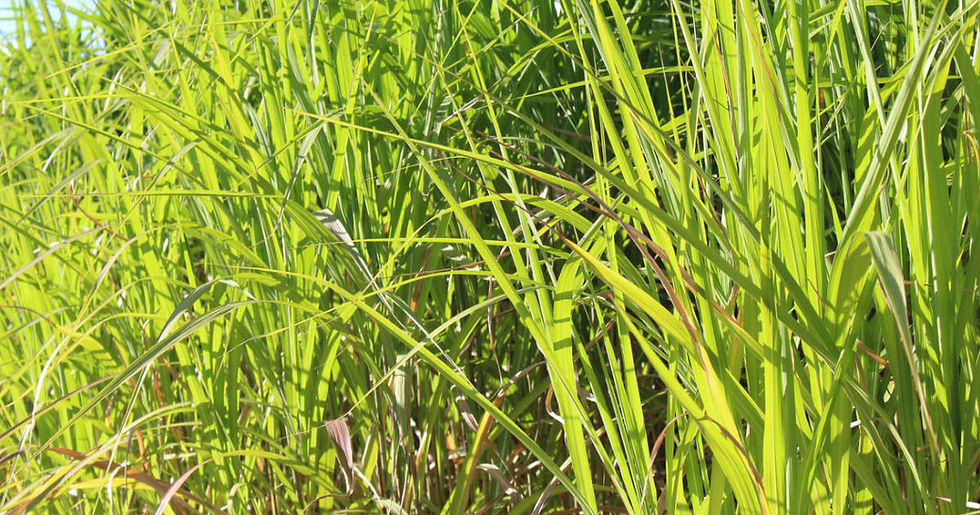
Terravesta Athena miscanthus grows where cereals no longer pay their way. The crop is planted once, the plantation keeps producing for more than twenty years, and its roots reach 2.5 m deep and hold the soil against erosion. While the soil recovers, the plantation yields biomass for sale every year, around 15 t/ha on average from the fourth year. Miscanthus brings four types of degraded land back into use.
• sandy soils;
• peat and periodically flooded land;
• eroded slopes;
• industrially disturbed and contaminated land.
What degraded land is and how much of it Ukraine has
Article 171 of the Land Code of Ukraine classes as degraded land any plot whose surface has been disturbed by an earthquake, landslides, karst, floods or mineral extraction. Plots whose soils are eroded, waterlogged or contaminated with chemicals, or have raised acidity or salinity, also count as degraded. The code defines low productivity land as farmland with poor natural fertility whose cultivation is economically inefficient.
Estimates of the area of such land differ, because different sources count different categories.
• 865,400 ha needed to be taken out of use for conservation according to the State Service for Geodesy, Cartography and Cadastre for 2019, including 368,300 ha of degraded land, 463,100 ha of low productivity land and 34,000 ha of industrially contaminated land;
• up to 2.5 million ha of severely degraded land, according to the Ministry of Agrarian Policy and Food, as reported by Ekonomichna Pravda in September 2026;
• around 4 million ha of low productivity, degraded or marginal land unsuitable for wheat or sunflower, according to estimates by the Bioenergy Association of Ukraine (UABIO) and the National Academy of Agrarian Sciences of Ukraine.
1. Sandy soils
On the sandy and loamy sand soils of Polissia in northern Ukraine, cereals give low yields because sand holds water and nutrients poorly. Miscanthus grows well on these soils. In an interview with Ekonomichna Pravda, one of the owners of Miscanthus Technology said that for this crop rainfall matters more than the soil. Miscanthus does best where annual rainfall is between 600 and 650 mm.
Before the harvest at the end of winter or in spring, the miscanthus leaves fall and stay on the field. Every year this leaf litter adds organic matter that sandy soil lacks. SuperAgronom estimates that in Polissia 20 years of miscanthus restore the soil enough for conventional farming to resume on it.
2. Peat and periodically flooded land
Miscanthus grows well on peat soils and tolerates temporary flooding. On Miscanthus Technology plantations, the rhizomes survived two to three months submerged.
Permanently waterlogged plots, where water stands for most of the season, are unsuitable for miscanthus. For a specific field, a site audit sets the line between temporary flooding and waterlogging.
3. Eroded slopes
The miscanthus root system reaches 2.5 m deep. The roots and rhizomes bind the soil, so the crop stabilises slopes and protects the land against wind and water erosion.
A miscanthus plantation is not ploughed for more than twenty years. Over that time the soil on the slope is not loosened every year as it is under cereals, and rain does not wash the topsoil off bare tilled ground.
4. Industrially disturbed and contaminated land
This group includes former mining sites, industrial sites, land near wastewater treatment facilities and areas damaged by fighting. Miscanthus tolerates soil contaminated with heavy metals. In a study published in BioEnergy Research in 2017, cadmium, copper, lead and zinc accumulated mainly in the rhizomes and roots. The authors concluded that the low metal content of the stems allows such biomass to be used as fuel.
However, the metals do not always stay in the roots alone. In a study published in Heliyon in 2024, part of the cadmium, zinc and nickel on contaminated plots also accumulated in the stems, so biomass from such a plot should be tested in a laboratory before it is sold.
In Vorzel in Kyiv region, on land that was demined in autumn 2022, scientists have been growing giant miscanthus since 2023 in a project under the NATO Science for Peace and Security Programme. According to the researchers, the first analyses showed a positive effect on the biological properties of the soil and on carbon sequestration.
Land where miscanthus will not establish
The Land Code also classes soils with raised acidity or salinity as degraded, but not every such plot suits miscanthus. The crop grows poorly on heavily waterlogged, strongly acidic and strongly saline soils. Land with moderately raised or lowered acidity, where cereals no longer pay their way, is land that Terravesta Athena miscanthus can bring into use.
That is why, before the rhizomes are bought, an agronomist assesses the soil, the groundwater level and the rainfall, and uses the audit results to set the planting rate for Terravesta Athena rhizomes, between 20,000 and 22,000 per hectare. A technology plan for such a plot and advice throughout the season are part of agronomic support for a miscanthus plantation. The general requirements for rainfall, soil and logistics are covered in the article on miscanthus growing technology from site to harvest.
Send the location of your plot and a description of the soil, and an agronomist will assess whether it suits a Terravesta Athena miscanthus plantation.
How miscanthus restores the soil under a plantation
Like maize and sugar cane, miscanthus uses C4 photosynthesis and builds up carbon quickly. A researcher at Jan Evangelista Purkyně University in the Czech Republic says the plant sends up to 40% of the organic matter it produces through photosynthesis into the soil through its roots. That is far more than other farm crops do. Miscanthus also supports soil microorganisms that break down organic pollutants such as petroleum products faster.
The plantation needs no annual tillage, so the organic matter supplied by the roots builds up in the soil year after year. After 20 or 25 years the rhizomes are dug out, and researchers at the same university expect that the soil can then be used for conventional crops again.
Why restored land adds value when selling biomass in the EU
The EU Renewable Energy Directive (RED, 2018/2001) gives fuel made from biomass grown on restored degraded land a bonus of 29 g CO₂ equivalent per megajoule. The bonus is subtracted from the calculated carbon footprint, and it applies to liquid biofuels and to solid biomass fuels such as pellets alike. The bonus makes it easier for the fuel to clear the emissions saving threshold required to count towards the EU mandate.
The bonus is granted if three conditions are proven.
• in January 2008 the land was not in use for agriculture or any other activity;
• the land is severely degraded, meaning that for a significant period it was significantly salinised or had very low organic matter content and was severely eroded;
• carbon stocks on the land increase steadily, and on eroded land erosion falls noticeably.
The bonus applies for up to 20 years from the date the land is converted to agricultural use, which covers almost the whole working life of a Terravesta Athena plantation.
Ukrainian law does not yet regulate this question. According to Ekonomichna Pravda, the Ministry of Agrarian Policy and Food plans to define the terms severely degraded land and energy crops in law, because lease terms for land used in such projects depend on them. How miscanthus biomass reaches the European market is explained in the article on jet fuel from miscanthus.
Who is already restoring land with miscanthus in Ukraine
Miscanthus Technology represents Ukraine in the international MERIT project (Miscanthus Energy for a Resilient and Inclusive Transition), funded by the UK government under the Innovate Ukraine programme. The project involves growing miscanthus on degraded and abandoned land. According to SuperAgronom, the lead partner on the British side is Terravesta, while Liverpool John Moores University provides expertise in agronomy and phytoremediation, the cleaning of soil with plants. Within the consortium, Miscanthus Technology is responsible for growing and processing the biomass. As of May 2026, work had started in Rivne, Zhytomyr, Vinnytsia and Odesa regions.
There is also a community example in Khmelnytskyi region. In autumn 2025, the Teofipol community planted 160,000 giant miscanthus rhizomes on 8 ha next to its wastewater treatment facilities to clean the contaminated land naturally. The first phase cost €55,000, of which €50,000 came from the Embassy of Slovenia in Ukraine and €5,000 from the community itself. The second phase, with a budget of €140,000, expands the plantation to 24 ha and includes buying specialised machinery and a line for producing fuel pellets for municipal buildings. How a community assesses the return on such a plantation is explained in the article on miscanthus plantation payback.
Frequently asked questions
Can miscanthus be planted on degraded land?
Yes. Terravesta Athena miscanthus grows on sandy, peat, eroded and industrially disturbed land. Heavily waterlogged, strongly acidic and strongly saline soils are unsuitable. A site audit decides whether a specific plot is suitable.
What yield does miscanthus give on poor soils?
A Terravesta Athena plantation yields around 8 t/ha of biomass in its first year and around 15 t/ha on average from the fourth year. On poor soils the yield depends more on rainfall than on fertility, so the yield forecast for a specific plot comes from a site audit.
Can biomass from a contaminated plot be sold?
Miscanthus holds most heavy metals in its roots and rhizomes, so the stems are usually suitable for burning. Biomass from a contaminated plot should be tested in a laboratory before it is sold, because some of the metals can also reach the stems.
Can miscanthus be planted on land under conservation?
The Land Code provides for conservation of land through grassing, afforestation or renaturalisation, and Ukrainian law does not yet define the term energy crop. That is why the legal status of a plot under conservation should be checked before the rhizomes are bought.
Can the field be returned to conventional crops after miscanthus?
Researchers expect so. After 20 or 25 years of the plantation's life, the rhizomes are dug out, and the soil restored over those years is planned to be used for conventional crops again.
Send the location of your plot and a description of the soil, and you will receive an assessment of whether the land suits Terravesta Athena miscanthus, together with the planting rate and a yield forecast.