Jet Fuel From Miscanthus in 5 Steps, From Field to Aircraft

In 2025, sustainable aviation fuel (SAF) went into aircraft at 121 airports across the European Union. It made up 2.8% of all aviation fuel sold at EU airports, and from 2035 EU regulation requires at least 20%. There will not be enough used cooking oil, which most SAF is made from today, for that volume, so Europe is looking for new feedstock. The EU Renewable Energy Directive names miscanthus directly as a feedstock for advanced biofuels. Miscanthus biomass is processed into cellulosic ethanol, and the ethanol into jet fuel.
The route from plantation to aircraft refuelling takes five steps:
• the plantation (from the fourth year Terravesta Athena yields around 15 t/ha of biomass);
• harvesting and densification (the biomass is baled or pelletised near the plantation);
• cellulosic ethanol (a tonne of dry biomass yields around 430 litres);
• converting ethanol into jet fuel (using the alcohol to jet process);
• certification and counting towards the EU mandate (miscanthus is listed in Annex IX of the EU directive).
What SAF is and why aviation needs it
SAF (sustainable aviation fuel) is kerosene made from biomass, waste or synthetic feedstock instead of crude oil. Chemically it is almost indistinguishable from conventional jet fuel, so it goes into the same tanks of the same aircraft without modification. Since 2018 the international standard ASTM D7566 has allowed conventional kerosene to be blended with fuel made from ethanol at up to 50%.
Burning a tonne of jet fuel produces 3.16 tonnes of CO₂. This is the factor used by the International Civil Aviation Organization (ICAO). The International Air Transport Association (IATA) estimates that SAF could deliver up to 65% of the emissions reduction aviation needs to reach net zero CO₂ by 2050. The rest of the reduction is expected from new aircraft and engines, more efficient routing, offsetting and carbon capture.
From 2026, airlines no longer receive free allowances under the EU Emissions Trading System (EU ETS) for flights within the European Economic Area and have to buy an allowance for every tonne of CO₂. As a result, every tonne of fossil kerosene costs airlines more than it did before.
Why Europe needs new feedstock for SAF
The ReFuelEU Aviation Regulation obliges fuel suppliers at EU airports to blend SAF into jet fuel at a minimum share that rises every five years.
• 2% from 2025;
• 6% from 2030;
• 20% from 2035;
• 34% from 2040;
• 42% from 2045;
• 70% from 2050, of which 35% must be synthetic fuels.
The EU met its first year's requirement with room to spare. According to the EU Aviation Safety Agency (EASA), suppliers delivered 39.3 million tonnes of aviation fuel at EU airports in 2025, of which 1.1 million tonnes were SAF. However, 80% of that SAF was made from used cooking oil, and 85% of its feedstock was imported from outside the EU.
EASA expects Europe to meet the 6% requirement in 2030 with its own production capacity. Meeting the 20% requirement in 2035 will be much harder. Analysts at Argus Media see the shortage of waste oils and fats as the main constraint on the market over the next ten years. By then Europe will need feedstock that can be grown in large volumes, including cellulosic biomass from energy crops such as miscanthus.
1. The plantation
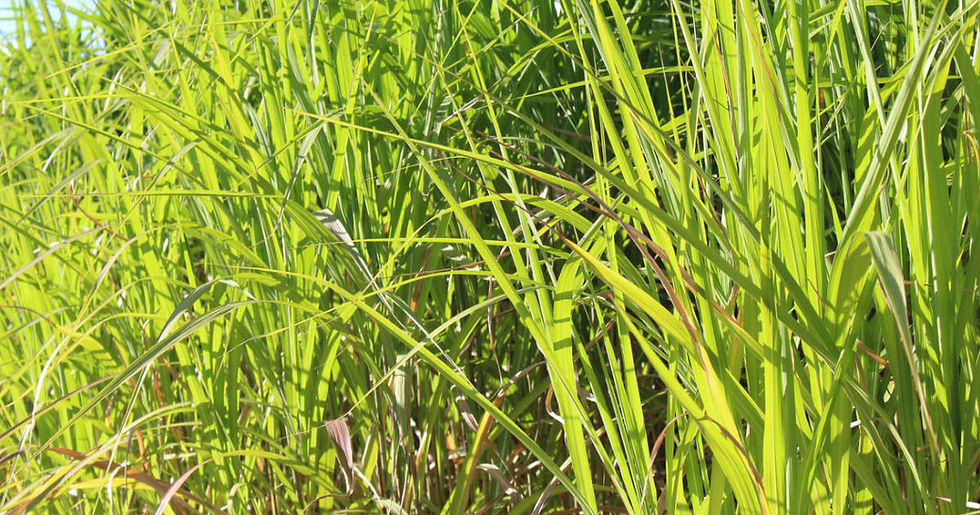
A Terravesta Athena miscanthus plantation yields around 8 t/ha of biomass in its first year and a steady 15 t/ha from the fourth year, and keeps producing for more than twenty years without replanting. The variety is sterile and sets no seed, so the miscanthus does not spread beyond the planted area.
A plantation established in 2027 reaches a steady yield in 2030, the year the EU mandate rises to 6%. That is why a plantation meant to supply a future plant is established several years before the plant itself is built.
The ReFuelEU Aviation Regulation only counts biofuels made from non food feedstock, and miscanthus, which is not used for food or animal feed, meets that requirement. The planting rate for Terravesta Athena rhizomes, between 20,000 and 22,000 per hectare, is set after a site audit.
2. Harvesting and densification
Miscanthus is harvested at the end of winter or in spring, once the stems have dried on the plant. The dried biomass is light and bulky, so transporting it over long distances does not pay. In a University of Illinois study published in Environmental Science & Technology in 2026, the modelled ethanol plant drew its feedstock from plantations within a radius of around 32 km.
A similar rule applies in Ukraine. According to Ekonomichna Pravda, miscanthus that has to travel more than 30 km is baled, while for processing closer to the field it is chopped. Miscanthus is currently exported only in the form of pellets, because feedstock for export has to be heat treated.
3. Cellulosic ethanol
Conventional bioethanol is made from grain or sugar crops. Cellulosic ethanol is made from plant stems and leaves, in other words from biomass. First, enzymes break the cellulose down into sugars, then the sugars are fermented into alcohol. The lignin, which does not ferment, is burned to supply the plant with heat and electricity.
According to the University of Illinois study, a tonne of dry miscanthus biomass yields around 430 litres of ethanol on average. Switchgrass, another energy grass, yields around 375 litres, partly because it contains more lignin.
4. Converting ethanol into jet fuel
The alcohol to jet (ATJ) process converts ethanol into aviation kerosene in three stages.
• ethanol is heated in the presence of a catalyst, loses water and becomes ethylene;
• the ethylene molecules are joined into longer hydrocarbon chains;
• the resulting hydrocarbons are saturated with hydrogen and separated by distillation into fractions, one of which is jet fuel.
One litre of ethanol yields up to 0.56 litres of jet fuel. The world's first commercial scale plant producing jet fuel from ethanol, LanzaJet Freedom Pines Fuels in Georgia, USA, began full operation in November 2025.
Ethanol is a liquid, so it can be processed locally from Terravesta Athena miscanthus biomass and shipped by tanker to an ATJ plant, even one in another country.

5. Certification and counting towards the EU mandate
Jet fuel made from miscanthus counts towards the ReFuelEU mandate if the feedstock meets the requirements of the EU Renewable Energy Directive (RED, 2018/2001). The directive names miscanthus among non food cellulosic materials, alongside switchgrass and giant cane. Non food cellulosic material is listed in Part A of Annex IX to the directive, the list of feedstocks for what the directive calls advanced biofuels.
For a batch of fuel to count towards the mandate, three conditions must be met.
• fuel from plants that started operating in 2021 or later cuts greenhouse gas emissions by at least 65% compared with fossil fuel;
• the land under the plantation did not have high biodiversity status, such as primary forest, in or after January 2008;
• the whole supply chain from plantation to plant is verified by a sustainability certification scheme such as ISCC EU.
The country where the biomass is grown does not matter, because the directive assesses feedstock irrespective of its geographical origin.
Whether a specific batch of fuel clears the 65% threshold depends on the site, the logistics and the plant. In the University of Illinois study, the carbon intensity of SAF from perennial grasses ranged from minus 9.7 to 39.4 g CO₂ equivalent per megajoule, while the carbon intensity of fossil kerosene is 84 g. The biggest reduction in the carbon intensity of miscanthus SAF comes from the carbon its rhizomes store in the soil. That is why compliance with the 65% threshold is verified separately for each supply chain.
How much jet fuel a hectare of miscanthus produces
Below is a calculation for one hectare of Terravesta Athena plantation yielding 15 t of biomass. The ethanol yield and the factor for converting ethanol into jet fuel come from the University of Illinois study.
Stage | Basis | Per hectare |
Yield | steady yield from the fourth year | 15 t of biomass |
Cellulosic ethanol | around 430 litres per tonne of dry biomass | around 6,500 litres |
Jet fuel | up to 0.56 litres per litre of ethanol | up to 3,600 litres, around 2.9 t |
The calculation gives an upper estimate. The yield is treated as dry matter, although the stems still hold some moisture at harvest, and the study's authors themselves describe the 0.56 factor as optimistic.
Burning the same amount of conventional kerosene, 2.9 t, would produce around 9 tonnes of CO₂. On this calculation, covering just 1% of the aviation fuel sold at EU airports in 2025 would take around 135,000 hectares of miscanthus plantations.
Send your area and region, and you will receive a calculation of how much biomass your Terravesta Athena plantation will produce and what it pays best to make from it.
How to sell miscanthus feedstock in the EU
Which miscanthus products to ship to the EU, and which documents they need, depends on the buyer.
• Today miscanthus is exported to the EU only in the form of pellets. The largest buyer is Poland, where the state supports the switch to pellet heating. For boiler houses and power plants of 7.5 MW and above, the directive requires proof of sustainability, while domestic boilers do not need it.
• Ethanol from miscanthus will become an export product after 2030, when the EU mandate rises from 6% to 20%. Shipping bales of biomass to a plant in Europe does not pay, so the ethanol will be processed locally from Terravesta Athena miscanthus biomass and shipped by tanker to an ATJ plant.
•

A sustainability certificate will be needed both for pellets bought by large boiler houses and for ethanol. The buyer checks where the feedstock comes from and what land it was grown on. Ukrainian exporters of rapeseed for EU biodiesel already work under the ISCC EU scheme.
Auditors and buyers will ask about the origin of the planting material, so it helps when it has been documented from day one. The Terravesta Athena variety is registered in Ukraine (variety registration certificate No. 250379, patent No. 250152), and the rhizomes come from the supplier's own mother plantation in Ukraine.
EU law does not restrict Ukrainian suppliers, so their prospects in this market depend on logistics and certification. A feasibility study for a miscanthus plantation helps work out a plantation for a specific buyer, a pellet plant or a future ethanol plant.
What is still missing
• Ukraine does not yet have any second generation cellulosic ethanol plants. According to Forest Brief, the country has no industrial SAF supply chain yet.
• SAF from cellulosic feedstock still costs more than fossil kerosene. In the University of Illinois study, the minimum selling price of SAF from miscanthus ranged from 7.9 to 12.3 dollars per gallon, while jet fuel averaged 2.03 dollars per gallon between 2020 and 2022.
• Years pass between planting the rhizomes and producing the first litre of fuel. A Terravesta Athena plantation reaches a steady yield in its fourth year, and the plants that will process the biomass still have to be built.
Until Ukraine has cellulosic ethanol plants, miscanthus biomass is sold for pellets and burned in boiler houses and grain dryers. The article on the energy value of miscanthus biomass covers this in more detail.
Frequently asked questions
What is SAF?
SAF, or sustainable aviation fuel, is kerosene made from biomass, waste or synthetic feedstock instead of crude oil. It is blended with conventional kerosene and used in the same aircraft. The ASTM D7566 standard allows fuel made from ethanol to be blended into conventional kerosene at up to 50%.
Can jet fuel be made from miscanthus?
Yes. Miscanthus biomass is processed into cellulosic ethanol, and the ethanol into jet fuel by the alcohol to jet process. Cellulosic ethanol and jet fuel from ethanol are already produced at commercial plants elsewhere in the world, but Ukraine has no such plants yet.
How much jet fuel does a hectare of miscanthus produce?
On an upper estimate, a hectare of Terravesta Athena plantation yielding 15 t/ha produces up to 3,600 litres of jet fuel a year, or around 2.9 tonnes.
Does fuel from miscanthus count towards the EU mandate?
Yes. Miscanthus is listed in Part A of Annex IX to Directive 2018/2001, so ReFuelEU Aviation counts fuel made from it as an aviation biofuel. To qualify, the whole supply chain from plantation to plant must be certified as sustainable.
Can Ukraine supply feedstock for SAF?
It can, because the directive places no restriction on where the biomass comes from. Today that means pellets, and later ethanol processed locally from Terravesta Athena miscanthus biomass.
Establish your plantation for the European market while the EU mandate is only 2%. Send your area and region, and you will receive a Terravesta Athena plantation calculation for selling pellets today and biomass for ethanol after 2030.